Data-Driven Menu Planning: How Analytics Can Cut Food Waste
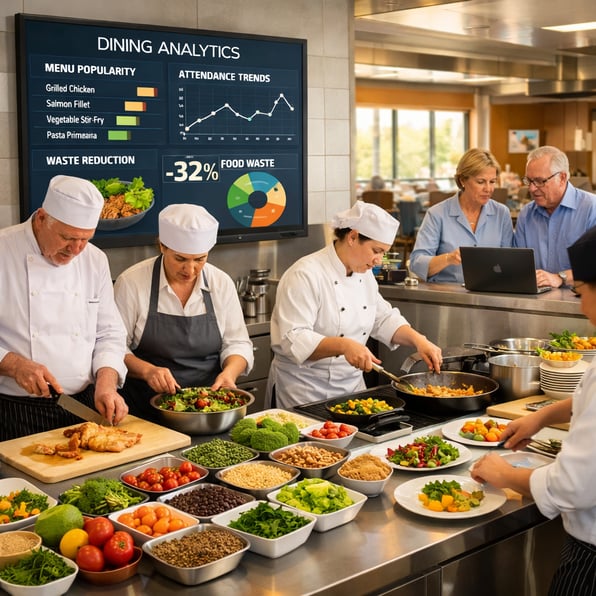
Food waste is reaching a crisis point across the U.S., and is growing to be one of the most persistent and costly challenges facing senior living communities today. Shockingly, around 30% of the world's total food supply goes to waste every day, resulting in overflowing landfills and a worrying increase in greenhouse gas emissions.
The harm doesn't stop there. The financial impact of food waste is very real. Wasted food means wasted dollars spent on useless ingredients, unnecessary labor, and the resulting food disposal. Even the most dedicated culinary teams can find themselves discarding prepared meals due to unpredictable attendance, shifting resident preferences, or well-intentioned overproduction.
"The answer isn't paring down menus or compromising on hospitality. The answer is better planning."
By embracing data-driven menu planning, dining leaders can use real-world insights from resident choices and consumption trends to plan meals more efficiently, order with greater precision, and achieve meaningful food waste reduction — without sacrificing the variety and nutrition residents deserve at every meal.
The Waste Problem Hidden in Everyday Operations
Food waste is a senior living dining challenge that rarely shows up all at once. Instead, it builds slowly across dozens of small inefficiencies, and if you aren't actively looking for them, they can be easy to miss. Common culprits of food waste include:
- Guessing daily participation: Instead of tracking actual attendance trends, guesstimating leads to consistent over- or under-preparation.
- Over-prepping: Preparing or planning for too much food "just in case" without reliable data to justify those decisions leads to even more waste.
- Underestimating demand: Not being prepared for item-level demand leaves some dishes overprepared while others are neglected.
- Failure to adjust orders: Preferences shift and participation drops, especially during holidays and seasonal transitions. Not planning ahead for these downtimes could lead to overordering and poor inventory management.
- Spoilage of perishable ingredients: When purchasing isn't aligned with actual dining demand, over-buying perishable items means some will likely go to waste.
The financial cost of overproduction adds up fast, but the impact goes well beyond your budget. When staff members spend shifts managing wasted food rather than elevating the dining experience, morale takes a hit. And as sustainability goals become a growing priority across the senior living space, unchecked food waste works directly against the environmental commitments communities like yours are working hard to uphold.
See exactly where your kitchen is losing money.
eMenuCHOICE gives dining leaders a clear view of waste patterns, so they can take action — not just take note.
Schedule a DemoWhat "Data-Driven Menu Planning" Means — and Why It Works
Data-driven menu planning means using historical dining data rather than intuition to guide what meals are prepared, how much food is ordered, and how menus are structured across the week.
The right foodservice data analytics platform captures patterns that are easy to overlook in the daily rush: which dishes residents consistently finish, which ones get left on the table, how meal participation shifts by day of the week or by season, and where overordering or underordering is happening on a regular basis.
Instead of relying on last month's averages or best guesses, your culinary and dining management teams can make informed decisions grounded in resident reality. That means less wasted food, better forecasting, and more efficient kitchen workflows — without diminishing the hospitality that makes dining a highlight of the day.
4 Ways Analytics Reduce Food Waste and Improve Dining Efficiency
Data analytics can be used to find specific opportunities to save food, time, and money. Here's how:
Predicting Meal Participation More Accurately
Knowing how many residents will dine on a given day is one of the biggest factors in reducing food waste. Attendance isn't random — it follows patterns tied to the day of the week, upcoming events, holidays, and seasons. Analytics platforms track these patterns over time and turn them into reliable forecasting tools.
When your team can anticipate participation with greater accuracy, they can plan and prep the right quantities. The result is less leftover food, more predictable service, and a kitchen that runs leaner without cutting corners on quality.
Identifying Which Menu Items Actually Get Eaten
A dish might sound appealing on paper and still go largely untouched on the plate. Analytics reveal which menu items residents consistently enjoy and which ones end up in the trash — giving dining teams the food waste data they need for benchmarking and smarter decision-making.
If an item regularly ends up in the compost bin instead of on an empty plate, the waste patterns provide a signal to act. Teams can adjust portion sizes, rework recipes, or replace low-consumption items entirely. Aligning menus with resident preferences and habits leads to both happier diners and meaningful food loss reduction.
Aligning Kitchen Production and Ordering With Demand
One of the most impactful waste reduction strategies is connecting meal selection data directly to purchasing and inventory management. When kitchens can predict ingredient needs based on upcoming selections rather than historical averages, they can order more precisely, reduce spoilage of perishable items, and avoid costly overstock.
Integrated food waste data also helps teams sidestep emergency supply chain orders that strain budgets and disrupt workflows. The ability to optimize ordering in real time improves operational efficiency and, ultimately, profitability across your foodservice program.
Personalizing Choices While Streamlining Prep
Personalization and efficiency don't have to work against each other. Analytics can help dining teams group residents by dietary preference or type, so they can plan portions more strategically — offering meaningful variety without dramatically increasing prep volume.
When teams know that a consistent segment of residents prefers specific dietary styles or cuisines — or that certain segments have important dietary restrictions or other nutritional needs — they can build that into production planning. The result is a dining experience residents appreciate and a kitchen workflow that stays manageable for staff members.
The Broader Impact of Data-Driven Menu Planning
The benefits of smarter menu planning go well beyond the kitchen. From a sustainability perspective, less wasted food means a smaller environmental impact — with less food heading to landfills, lower greenhouse gas emissions associated with decomposing organic matter, and a more compelling story around your community's sustainability commitments.
Financially, reducing overproduction improves profitability across your entire foodservice operation. For staff, streamlined workflows mean less time managing inefficiencies and more time focused on what really matters: creating meals residents genuinely look forward to eating. And for those residents, data-driven dining means menus that reflect their actual preferences and dietary needs — resident satisfaction improves, and so does their confidence in your community.
- Sustainability: Less food to landfill, lower greenhouse gas emissions, a stronger sustainability story.
- Profitability: Reduced overproduction translates directly to a healthier bottom line.
- Staff morale: Fewer inefficiencies mean more time devoted to genuine hospitality.
- Resident satisfaction: Menus that reflect real preferences build trust and confidence in your community.
Bring Data-Driven Menu Planning to Life with eMenuCHOICE
eMenuCHOICE is a senior dining software with a difference. It captures dining room data from every resident selection and transforms it into easy-to-use insights for chefs, dining managers, and senior living leaders. From comprehensive dashboards that surface waste patterns at a glance, to reporting that supports real-time decision-making, eMenuCHOICE gives your team the visibility they need to plan smarter and waste less.
The platform is intuitive enough for busy culinary teams to use as part of their daily workflows, yet powerful enough to support benchmarking and data collection across multiple communities and sites. And with seamless integrations into care management, billing, and inventory management systems, eMenuCHOICE ensures your food waste management efforts are backed by clean, connected data — not guesswork.
Your dining team does great work to manage the impact of food waste every day. With eMenuCHOICE, they'll have a powerful tool to do that job even better.
See Our AI-Powered Waste Reduction in Action
Ready to see exactly how eMenuCHOICE can help your community reduce food waste, control costs, and delight residents? Start the conversation with our team today.
More Questions For Us?
We're here to help. Reach out to the eMenuCHOICE team or explore our resources below.
Senior living communities are significant contributors to institutional food waste. Industry estimates suggest that up to 30% of food prepared in care settings goes uneaten, driven by unpredictable attendance, overproduction, and shifting resident preferences. This translates into thousands of dollars in unnecessary costs annually, making waste reduction a top operational priority.
Data-driven menu planning uses historical dining data — such as meal participation rates, item-level consumption trends, and seasonal attendance patterns — to guide what food is prepared and ordered. Rather than relying on guesswork, culinary teams use analytics to make smarter, more precise decisions that reduce waste without compromising menu variety or resident satisfaction.
The most effective strategies include accurately forecasting meal participation, tracking which menu items residents actually consume, aligning purchasing and inventory management with real demand, and personalizing meal planning by dietary preference or restriction. Analytics platforms like eMenuCHOICE help dining teams implement all of these strategies using real-world resident data.
Food waste directly impacts profitability through unnecessary ingredient costs, excess labor, and food disposal expenses. When kitchens overproduce consistently without data to guide production planning, those losses compound quickly across an entire foodservice operation. Communities that reduce overproduction through smarter menu planning typically see measurable improvements to their bottom line.